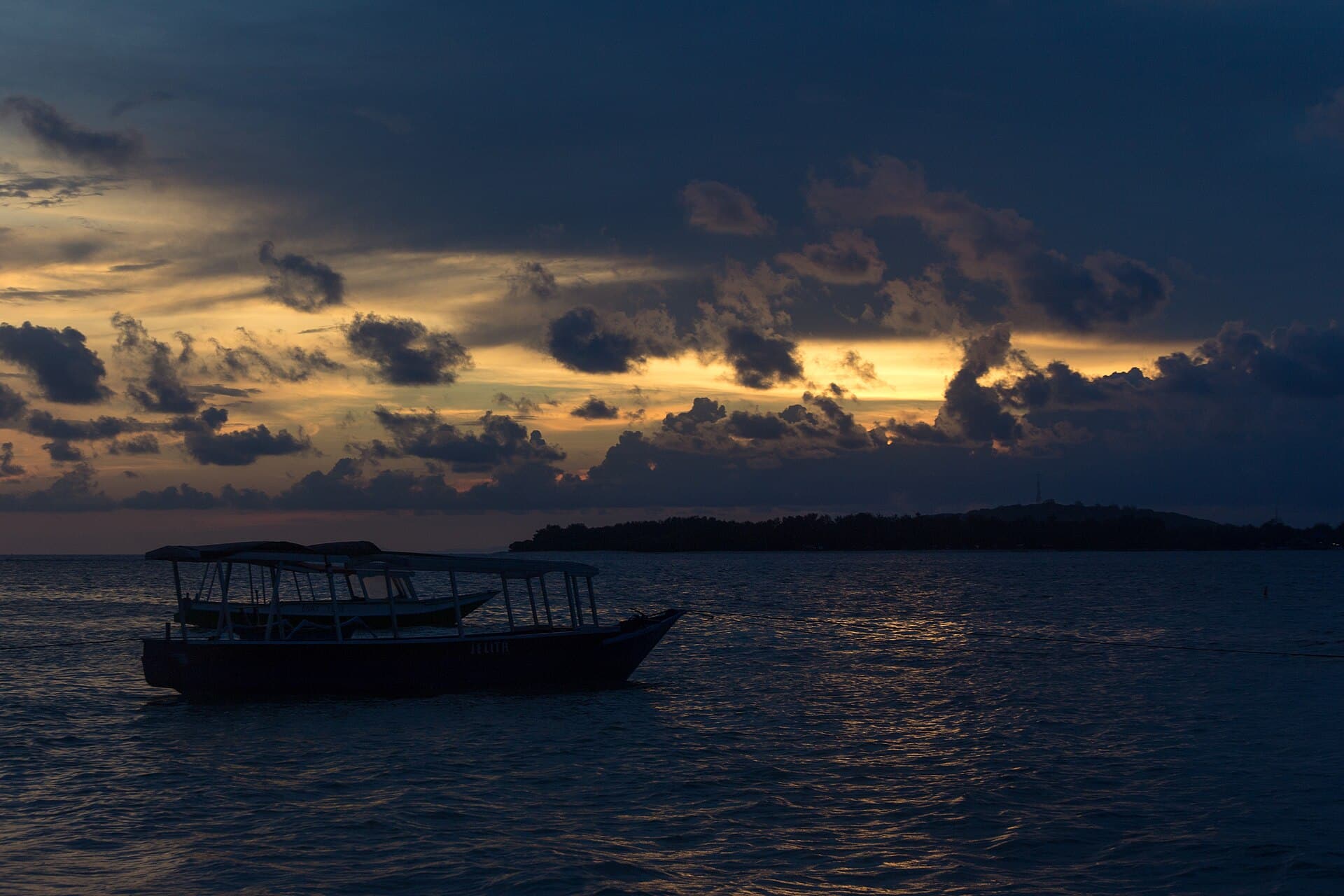
Gili Air is warm all year: daytime temperatures sit around 29–32 °C and the sea at roughly 27–30 °C. What changes is the rain. Like the rest of Lombok and Bali, the Gilis have a dry season from about April to October and a wet season from about November to March.
The short answer: May, June and September are the sweet spot — dry, sunny, calm seas and fewer people than the July–August peak.
Month by month
| Month | Weather | Sea & boats | Crowds |
|---|---|---|---|
| January | Wet season, heavy showers | Crossings can be rough | Busy at New Year, then quiet |
| February | Wettest, humid | Rough days common | Quiet |
| March | Showers easing | Improving | Quiet |
| April | Mostly dry, green island | Calm, visibility improving | Quiet to moderate; Easter busier |
| May | Dry and sunny | Calm; good snorkelling | Moderate |
| June | Dry, a little cooler | Good; some wind | Moderate, busier late month |
| July | Dry, breezy | Good visibility; some swell | Peak season |
| August | Dry, breezy | Good visibility; some swell | Peak season |
| September | Dry and sunny | Excellent | Moderate |
| October | Mostly dry, getting humid | Very good | Moderate to quiet |
| November | First rains, afternoon storms | Mostly fine | Quiet |
| December | Wet season | Can be rough | Quiet until Christmas, then busy |
Dry season (April–October)
Blue skies, low humidity by tropical standards and usually calm mornings on the water. This is the best time for snorkelling and diving visibility, for Rinjani treks (the national park is open) and for clear sunset views of Bali’s Agung. The trade-off is crowds in July and August, when European summer holidays fill the fast boats and the best bungalows — book both well ahead.
Wet season (November–March)
Rain usually comes as heavy afternoon or evening downpours rather than all-day grey, and there are plenty of sunny hours in between. The island is green, quieter and cheaper. The downsides: rougher crossings from Bali (some boats are cancelled on bad days), more plankton and lower visibility at times, and the Rinjani National Park is usually closed to trekkers from around January to March.
Ramadan and holidays
Gili Air is a Muslim island. During the fasting month of Ramadan — its dates move about 11 days earlier each year — life is quieter, some local warungs close during daylight and the nights come alive after sunset. It is a perfectly good time to visit; just be respectful. The days around Eid (Lebaran) at the end of Ramadan, Indonesian school holidays and Christmas–New Year are busy with domestic and international visitors.
Best time for…
- Snorkelling and diving: May to October for visibility; the water is warm year-round.
- Rinjani trekking: roughly April to December, when the park is open — the dry months are best.
- Sunsets over Bali: dry season, when the air is clear enough to see Mount Agung.
- Low prices and few people: November to March, avoiding Christmas and New Year.
- Surfing on Lombok’s south coast: the dry season brings the most consistent swell.